
Veteran Voices
Army infantry veteran Lino Camacho pulled two people out of danger before he turned 18, survived a night ambush in Afghanistan, and then wrote two books about the things that nearly broke him.
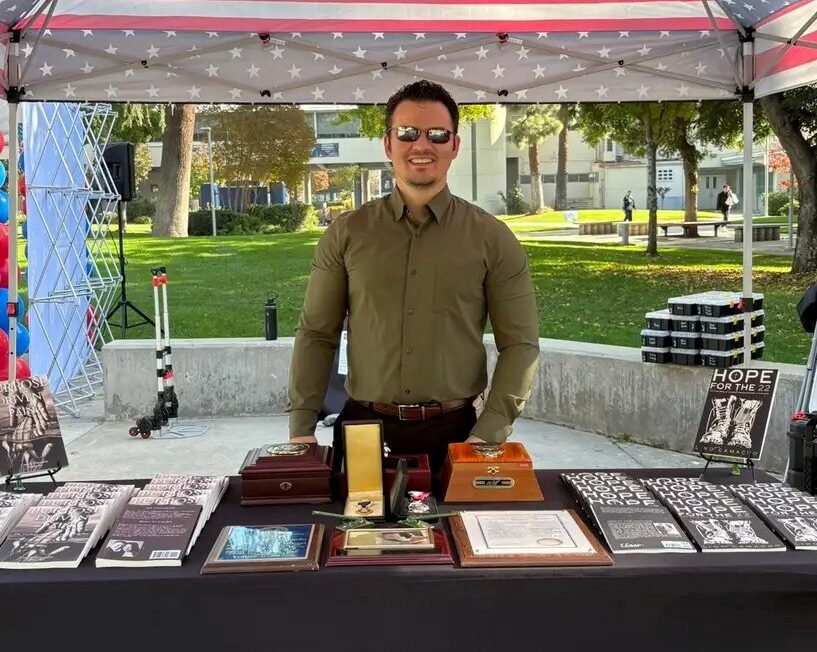
Lino Camacho does not want to be mistaken for a salesman.
He sets up at community events with his books spread out and a row of plaques propped beside them. Some people take one look and pull back. He can read it on their faces: what is he selling? So he says the same thing every time. Even if the books are not for you, you probably know someone who is struggling. Listen.
He is not out there for the money. He is out there because he lived through the things he writes about, and he knows what it costs to carry them alone.
A young man who ran toward trouble
Lino grew up in the Central Valley in the eighties and nineties, watching Rambo and wanting to be like his grandfather, who served. He prayed as a kid for a chance to save someone's life. He got two before he left high school.
The first came freshman year at the pool at Tulare Union. A classmate who could not swim jumped off the high dive, probably to impress a few girls, and belly flopped on the way down. He came up screaming for help with his arms in the air, then went under. Lino dove in, grabbed him from below, and started kicking toward the wall. Other guys jumped in, and the boy got passed hand to hand until he reached the edge. He joined the Marines later.
The second came a month before graduation. It was senior late-start day, a Wednesday, and the family was holding a yard sale. Lino and his brother were carrying boxes when a neighbor shouted that a dog was attacking someone. They dropped everything and ran. His brother got wedged between the beams of the first fence. Lino kept going.
In the backyard he saw a big dog shaking something like a rag doll. It was a seventeen-month-old girl. Between Lino and the dog stood a chicken wire fence he puts at seven or eight feet. He got over it by grabbing the roofline and throwing himself across. He is not tall, and he says God gave him that jump.
He hit the dog hard on the back of the head. It let go of the child and went for his throat. Lino got it in a headlock. A second dog came at him and he kicked it in the face. The girl's aunt lay nearby with puncture wounds on both forearms from covering the baby. The baby was bleeding and turning purple.
He held that dog for somewhere between forty minutes and an hour, squeezing every time it tried to get loose, until animal control arrived. The first officer on scene was a family friend who drew his weapon and aimed at the dog's head. Lino was standing directly behind it. "I'm not gonna die by the dog," he remembers thinking. "I'm gonna die by the officer."
The girl survived. At graduation the police chief, the fire department, and animal control honored him with plaques and a life-saving medal. Then the little girl walked across the field toward the podium with a plaque of her own that read thank you for saving my life, and opened her arms for a hug. Lino held his tears back until the whole stadium sighed at once.
Infantry
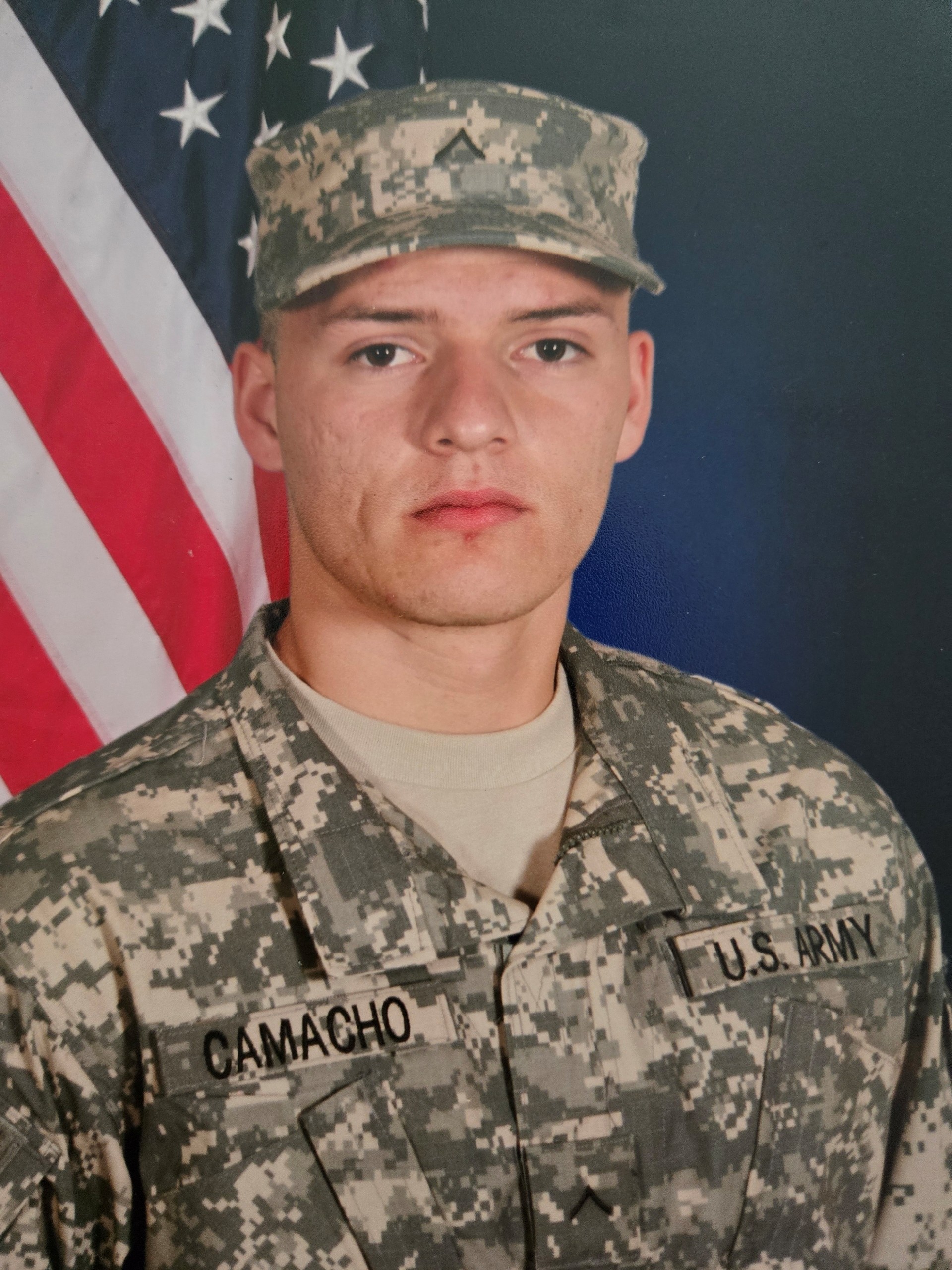
He enlisted in the Army and chose infantry. Fort Benning hit him the moment the bus stopped and he saw the drill sergeants lined up outside. During reception he stayed awake for three days, signed papers he could not read, and watched cars drive through the gymnasium-sized room that were not there. His first day of basic training was his birthday. He told no one.
He finished near the top of his class, spent a gray stretch at Fort Lewis in Washington, and got orders for Afghanistan. At Kandahar Airfield, the ramp dropped, the heat hit his face, and he saw bullet holes in the airport walls. "This ain't no video game where you can get killed and respawn again," he says.
His unit later moved to a strongpoint called Punisher, a house with no roof, where anyone could drop a grenade over the wall. Firefights were routine. He tells the funny ones too: a platoon leader who sprinted across open ground between trucks with rounds kicking up dust at his boots, and a night on a guard tower when Lino noticed a fresh bullet hole in the beam behind him. His buddy, a combat veteran, told him it was nothing. Ten minutes after their shift ended, the radio reported shots from the east.
He woke up one morning sure the outpost would be hit that night. He told everyone. He did not sleep.
That day he kept telling his squad to be ready. They teased him. When his guard shift ended, he took the next one, then the next. Sometime after midnight, sitting beside a big German guy named Mickey, the crickets stopped. Then thirty or forty tracer rounds cracked through the gap between them.
Lino flipped his night vision down, put his infrared laser on the muzzle flashes, and kept firing. He shouted for everyone to switch to infrared so the attackers could not see their positions. Sand from the sandbags stung his face. Someone finally got the fifty-cal running and a grenade launcher joined in. The shooting stopped. The attackers were thirty or forty meters from the wall, close enough to throw a grenade into the compound.
A full colonel came a few days later and gave Lino a leadership excellence award. Years afterward, at an event last fall, a sixteen-year-old looked at it and asked whether he got it in ROTC. Lino laughs telling it. He kept his mouth shut that day, but his thoughts were colorful.
Through all of it he prayed. He ran Psalm 23 through his head, and he had a second prayer he is blunt about: if I die, take me to heaven. If I am going to hell, do not let me die. He was not right with God yet, and he knew it.
What came after
Coming home was harder than going over. He remembers a lot of anger in those years, some of it aimed at the wrong people, and drinking that nearly cost him his marriage. He also struggled with pornography, which he says is treated as normal talk in the military and carries a lot of shame anyway. He wrote about it in his first book because he knew other veterans were hiding the same thing.
The hardest chapters to write were about family. He cared for his grandfather through a slow death from Agent Orange, rubbing his legs and holding the bucket in the middle of the night. He wrote about losing a cousin. Every one of those pages cost him.
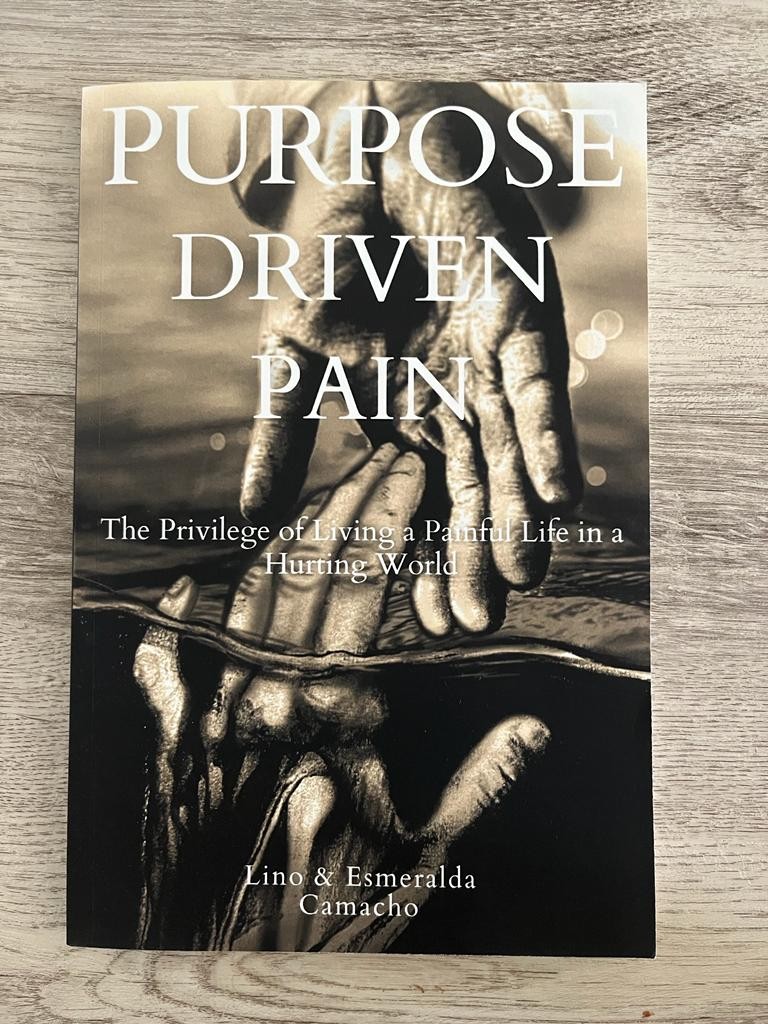
His second book, Purpose Driven Pain, is credited to Lino and his wife, Esmeralda, and he started writing it three days after they lost their baby at nine weeks. He typed through tears. He chose to be specific about what they saw and held so other parents would know they were not alone. He is direct about the comparison. "I've been in combat in Afghanistan," he says, "and it doesn't come close."
While Esmeralda was inside the hospital, he sat in his car because he was not allowed in with her. He asked God why. He did not hear a voice, he says, but the answer arrived inside him anyway: because you will help people who go through this.
The restroom at Kohl's
The first book started on a cold, rainy night in Visalia, three days before he and Esmeralda moved to Texas. They were in pajamas watching a movie. Lino felt a pull to go to Kohl's. He told his wife, who would normally have stayed put, and she said okay.
Inside the men's room he found a seventeen-year-old crying at the sink with a razor blade in a stall. The teen told Lino he was a Satanist and that Jesus would never forgive him. Lino told him about his own life: combat, the nightmares, the drinking, the marriage he almost lost, and what changed. They prayed together right there. The boy had come to the store to end his life and left having made a different decision.
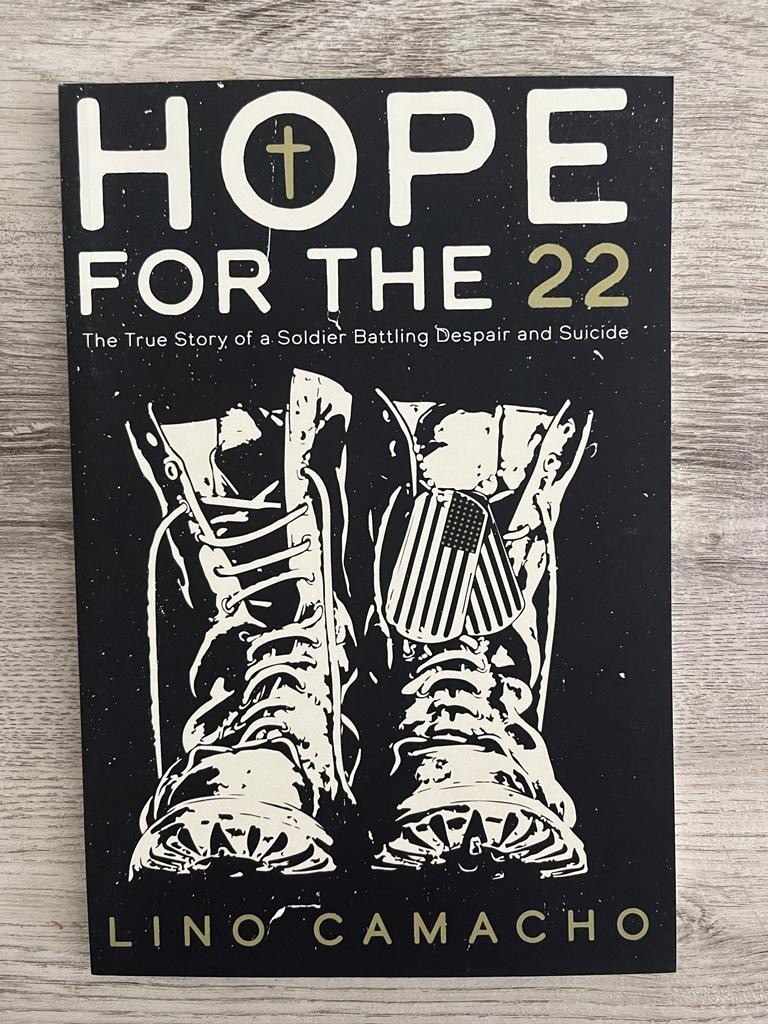
Lino decided that night to write a book. Three years later, Hope for the 22 was published.
He has talked other people back from the edge since. One was an older man who had settled on a plan and would not budge. Lino got blunt with him about what his death would do to his kids. The man changed his mind. A few months later Lino heard he had landed his dream job.
Legacy
Asked what he wants to be remembered for, Lino skips the money and the recognition. He wants to be remembered as someone who kept chasing what God asked of him, even when it meant less income and fewer trips, and who put other people ahead of his own plans.
Every book he signs gets a personal dedication and his phone number inside the cover, in case the reader needs someone to call.
"I was in the infantry," he says. "Now I'm in the infantry in the spiritual realm."
Lino Camacho's books
Hope for the 22: The True Story of a Soldier Battling Despair and Suicide
By Lino Camacho
Purpose Driven Pain: The Privilege of Living a Painful Life in a Hurting World
By Lino and Esmeralda Camacho
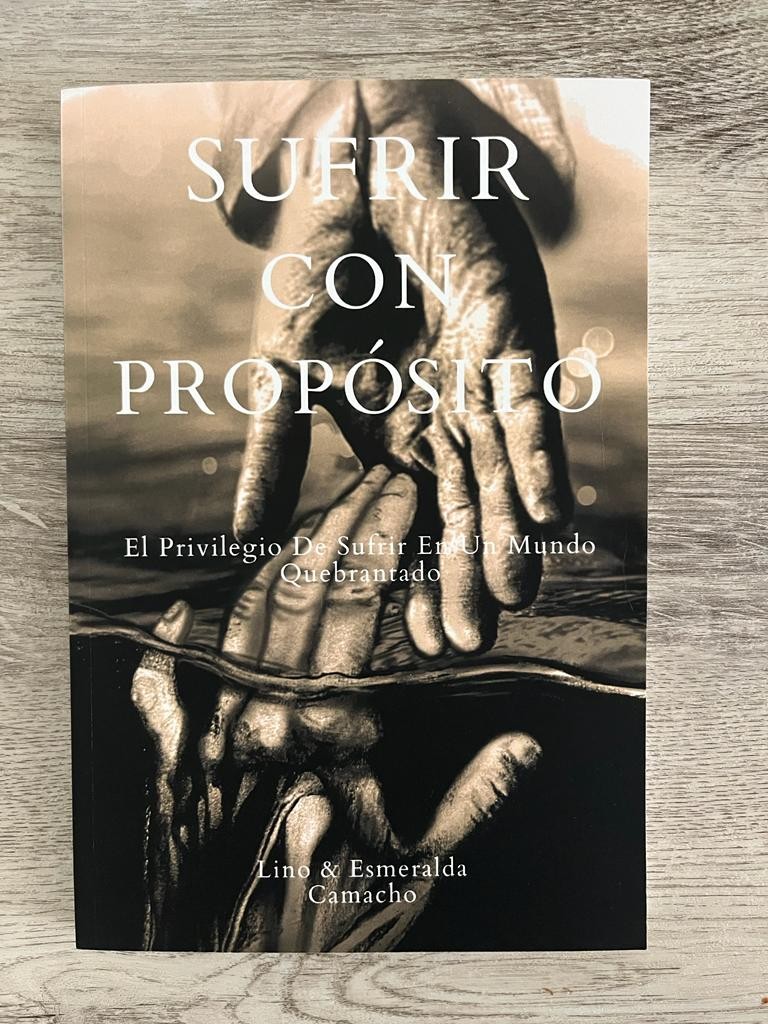
Sufrir con Propósito: El Privilegio de Sufrir en un Mundo Quebrantado
The Spanish edition of Purpose Driven Pain
All three are available on Amazon. For a signed copy with a personal dedication, message Lino on Instagram: @hopeforthe22
If you or someone you know is struggling
The Veterans Crisis Line is free and open every day. Dial 988, then press 1, or text 838255.
Veteran Art News highlights the creative and personal stories of those who served. To suggest a veteran artist or author for a feature, contact our editorial team.
